Dark Spot Serum
A development option for formulas addressing the appearance of dark spots. Select a carrier that keeps the active dissolved at the target loading; assess clarity, recrystallisation and colour throughout storage.
PH-SynBio 021 · MANUFACTURER & SUPPLIER
4-Butylresorcinol Manufacturer & Supplier
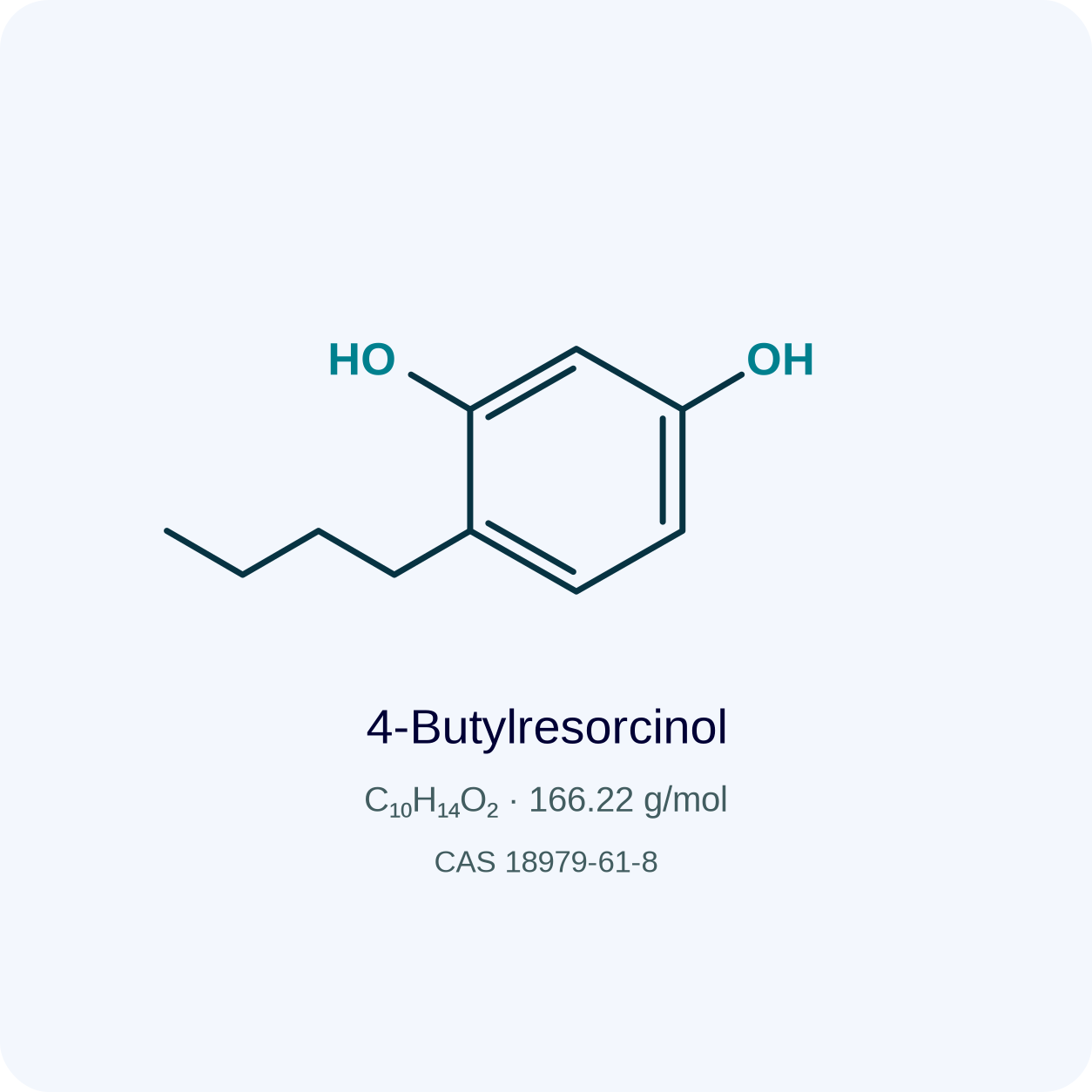
4-n-Butylresorcinol · CAS 18979-61-8 · INCI 4-BUTYLRESORCINOL
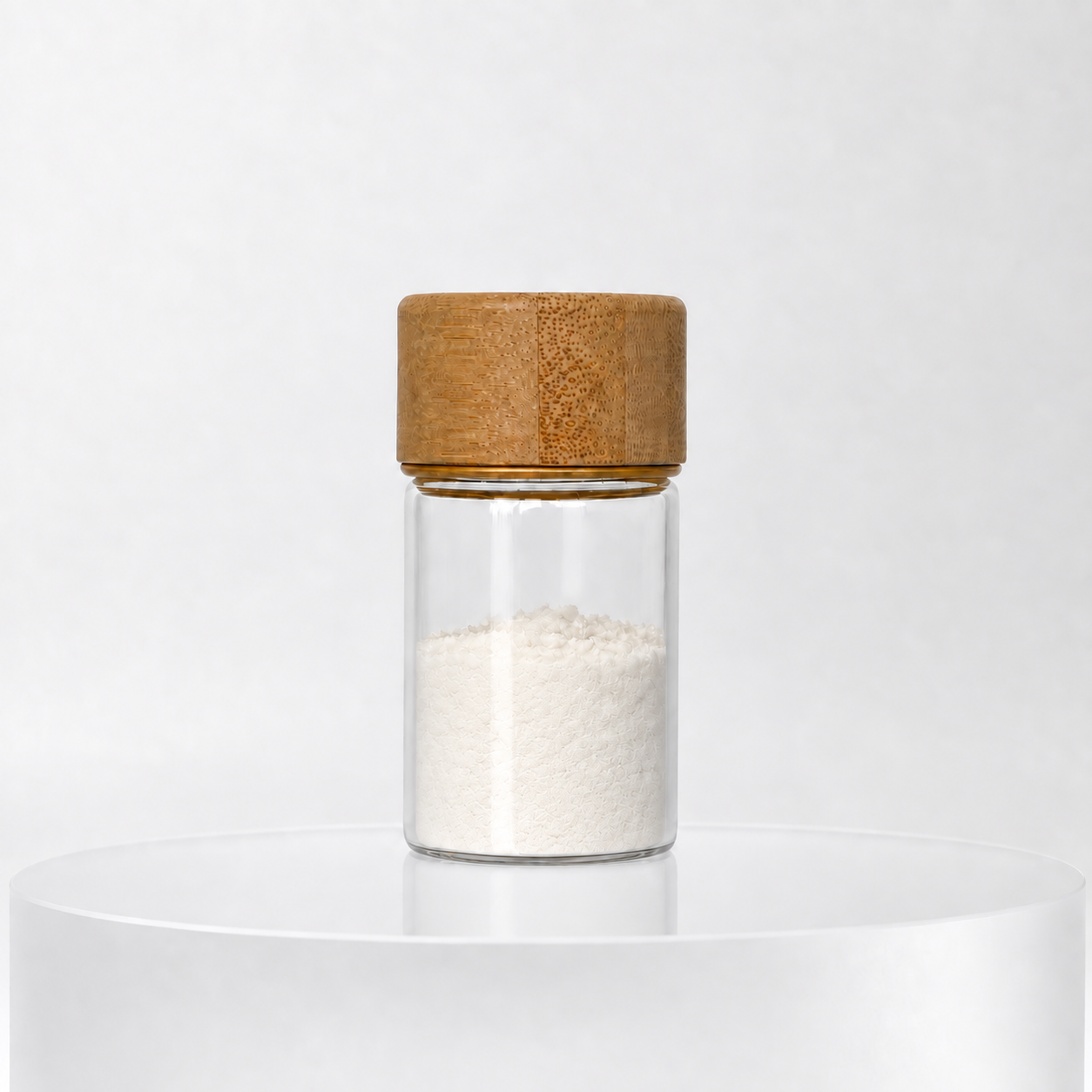
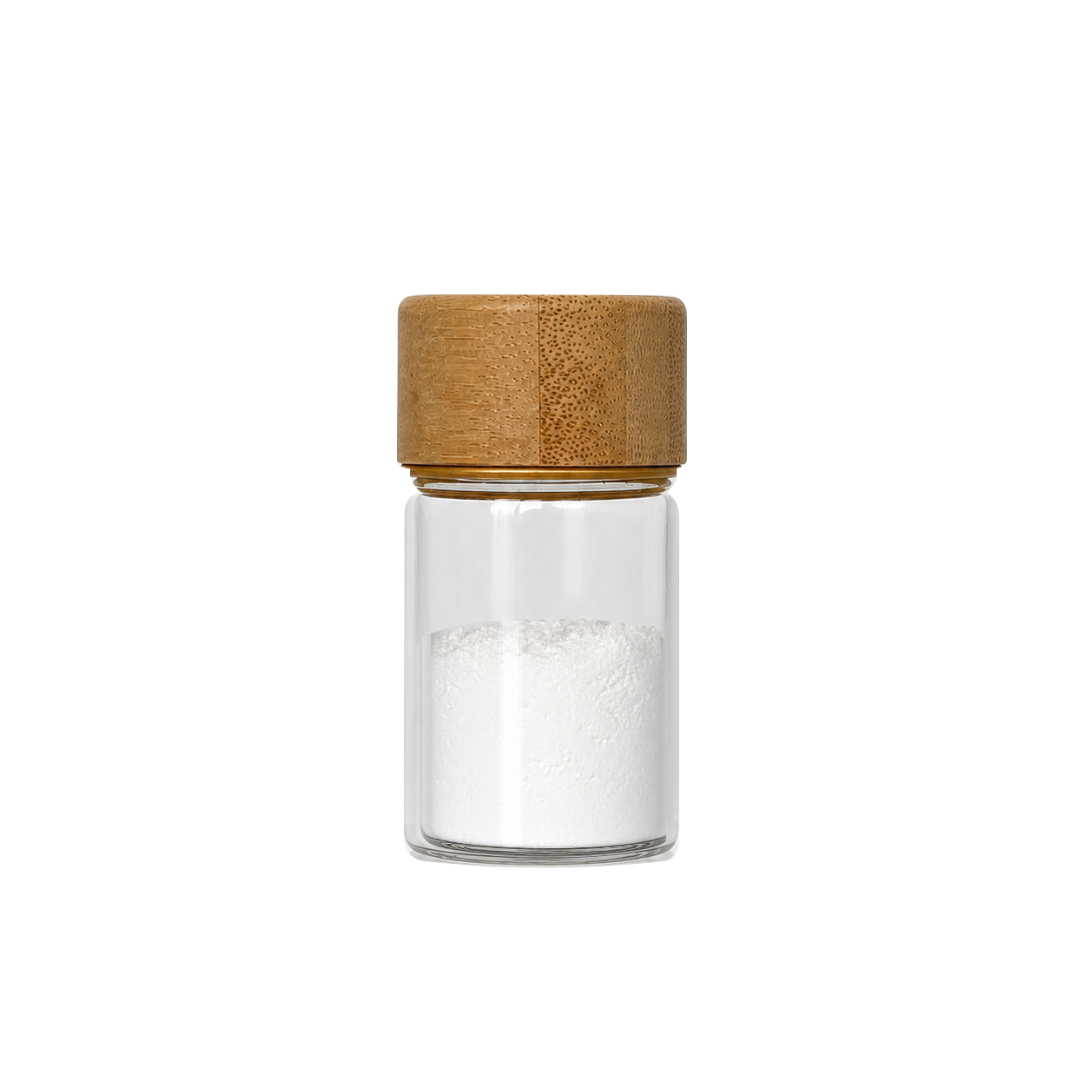
PINHONBIO® manufactures and supplies ≥99% (HPLC) 4-Butylresorcinol powder for brightening and uneven-tone cosmetic formulation. The reference batch COA reports 99.94%. MOQ is 1 kg, with a free 10 g sample and customer-paid sample freight.
For a quotation, include your required quantity, destination and intended formulation. The sample request uses the same PH-SynBio 021 product identity.
Batch PHWH26081501 · Purity result 99.94%; product specification ≥99% (HPLC).
| Test item | Acceptance criterion | Batch result |
|---|---|---|
| Appearance | White to off-white powder or crystal | Complies |
| pH (0.25% test system) | 5.0–8.0 | 7.06 |
| Purity | ≥99% (HPLC) | 99.94% |
| Water | ≤1.0% | 0.04% |
| Arsenic (As) | ≤2 ppm | Complies |
| Lead (Pb) | ≤10 ppm | Complies |
| Mercury (Hg) | ≤1 ppm | Complies |
| Cadmium (Cd) | ≤5 ppm | Complies |
| Aerobic bacterial count | ≤1,000 CFU/g | Complies |
| Mould & yeast | ≤100 CFU/g | Complies |
| Thermotolerant coliforms | Not detected | Not detected |
| Pseudomonas aeruginosa | Not detected | Not detected |
| Staphylococcus aureus | Not detected | Not detected |
Published work investigates tyrosinase and tyrosinase-related protein-1 (TRP-1), which participate in melanogenesis. Early cell studies and later human-enzyme work support this research direction. Enzyme activity, pigment production in a skin model and visible change in a human formulation are separate endpoints. Katagiri et al., 2001 · Kolbe et al., 2013
Tyrosinase / TRP-1 research
Cell and reconstructed-skin endpoints
Appearance and tolerance in the finished product
A 2016 mechanistic study also describes substrate behaviour under specified enzyme conditions. This is why a single, universal inhibition claim is an incomplete description. García-Jiménez et al., 2016
Development directions for professional cosmetic formulators. Published ingredient studies inform selection; the complete product still determines delivery, stability and performance.
A development option for formulas addressing the appearance of dark spots. Select a carrier that keeps the active dissolved at the target loading; assess clarity, recrystallisation and colour throughout storage.
Emulsion development is supported by published cream and lotion studies. Qualify active distribution, processing conditions and compatibility in the complete base rather than transferring study results to a new formula.
Evaluate appearance-based tone-evening objectives using a defined finished-product protocol. Ingredient identity and batch purity do not predict the performance of the complete formula.
Consider localised spot-corrector concepts with an appropriate delivery system. Confirm skin tolerance and finished-product claims in the intended use setting; do not present the raw material as a treatment.
Choose the supply form by active content, carrier compatibility and the solvent budget of your finished formula. A pre-dissolved system includes its own solvents and stabilising ingredients.
| Development question | PINHONBIO® 4-Butylresorcinol powder | Pre-dissolved system |
|---|---|---|
| Active content | ≥99% (HPLC); 99.94% in the reference batch | Confirm the declared active concentration and its analytical basis. Compare active delivered, rather than equal raw-material addition. |
| Carrier choice | Formulator selects and qualifies the solvent or delivery system | Review the full carrier composition, including solvents, humectants and stabilisers. Account for these in the formula’s solvent budget and compatibility assessment. |
| Incorporation | Screen pre-solubilisation, then test cooling and dilution into the base | A ready carrier can simplify dosing, but clarity, crystallisation and colour still require finished-product stability testing. |
Calculate active addition as concentrate addition multiplied by the concentrate’s active fraction. For example, a hypothetical 10% active concentrate added at 1% contributes 0.10% active. This calculation does not establish equivalent delivery or efficacy. For PH-SynBio 021, qualify the chosen solvent system, addition level and stability in the complete formula.
Screen a propylene-glycol or butylene-glycol pre-solubilisation route at the target active loading and within the finished formula’s solvent budget. The supplied reference uses 1% active with 13% propylene glycol in a separate concentrate; it does not establish equilibrium solubility or a universal solvent ratio.
Follow the existing reference below as a development example: prepare the active concentrate separately, confirm dissolution, then incorporate into the emulsion. Its base-phase temperatures do not define active heat stability. No numerical temperature is given for the active concentrate.
Recheck after cooling and after dilution into the full base. Examine room-temperature and cold-storage samples for crystals, sediment and clarity changes, including after temperature cycling. Initial clarity does not prove storage stability.
Compare colour and active assay under light, air and temperature exposure in the intended packaging. Published patent antioxidant combinations are formula-specific examples, rather than a universal stabiliser recipe.
Patent CN119792107B · formulation-specific colour stabilitySet acceptance criteria for active assay, appearance, crystallisation, colour, microbiological protection and skin tolerance. The COA pH 7.06 is measured in a 0.25% test system; its 5.0–8.0 acceptance range is not a finished-formula pH recommendation.
FORMULATION REFERENCE
This selected process outline is drawn from a supplied formulation reference. It illustrates a separate glycol concentrate in an emulsion; it is not a complete manufacturing formula or a validated performance claim for PH-SynBio 021.
Amounts below are percentages of the whole formula, not percentages within phase C.
| Phase | Ingredient / INCI | Whole-formula addition | Role |
|---|---|---|---|
| C | Propylene Glycol | 13.0% | Solvent for the separate active concentrate |
| C | 4-Butylresorcinol | 1.0% | Raw-material addition level in this reference |
The reference prepares water phase B at 82°C with a 20-minute hold after dispersion, and oil phase A at 80°C with a 10-minute hold after melting. These are base-processing conditions, not a heat-stability specification for the active.
Heat and stir phase C until dissolved, then stop heating. The reference next adds its phase-D skin-conditioning ingredients to this concentrate. No numerical phase-C temperature or hold time is given.
Add A into B and mix for 5 minutes; incorporate the prepared C + D concentrate, mix for another 5 minutes and homogenise for 5 minutes before cooling under stirring. Homogeniser speed is not specified in the reference.
At 50°C, add the separately prepared water-based phase E containing the reference’s additional actives, then mix uniformly. Confirm the suitability of this temperature for the exact grades selected.
Before adopting this route, establish the full INCI and grade identities, final pH, cold-storage crystallisation, colour and active-content stability, preservative efficacy and finished-product tolerance. The 13:1 solvent-to-powder ratio is a recipe ratio, not an equilibrium-solubility measurement.
Related technical context: Tetrahydropiperine skin-penetration evidence. Delivery-system findings require separate qualification before combining ingredients.
The following studies concern the ingredient or particular delivery systems. They did not qualify this PINHONBIO® supply batch, and their concentrations are not universal use recommendations.
Katagiri and colleagues studied melanogenesis and a 0.3% lotion, including UVB-related human pigmentation assessments. The formulation evidence is distinct from batch purity.
Katagiri et al., 2001Huh et al. studied 20 Korean women with melasma in an eight-week, randomised, double-blind, vehicle-controlled split-face trial: 0.1% conventional cream twice daily. Mean melanin-index change at week 8 was −4.87% on the active side versus +2.21% with vehicle (p<0.0005). Two participants had mild, transient erythema or itching at week 4. This finished-cream study did not test PINHONBIO® powder.
Huh et al., 2010 · conventional creamA separate eight-week split-face trial evaluated a liposome-encapsulated cream. Its delivery system and participant group differ from the conventional-cream trial.
Huh et al., 2010 · liposomal creamKolbe and colleagues examined human tyrosinase, reconstructed skin and human formulations. The often-cited paper is a 2013 journal publication; assay rankings do not predict a finished-product advantage.
Kolbe et al., 2013This work showed that 4-n-butylresorcinol can act as a tyrosinase substrate under specified conditions. Enzyme state and assay chemistry matter when explaining its activity.
García-Jiménez et al., 2016A nanoemulsion study explored solubility, stability and irritation-related endpoints. It is a delivery-system study, not a human efficacy trial of PINHONBIO® powder.
Shao et al., 2024Choose by evidence model, delivery system and finished-formula results. Kolbe’s human-enzyme study reported 4-n-butylresorcinol at IC₅₀ 21 μmol/L and kojic acid at approximately 500 μmol/L; its arbutin result should not be relabelled as a direct alpha-arbutin comparison. Kolbe et al., 2013
| Ingredient | Evidence to compare | Formulation decision |
|---|---|---|
| 4-Butylresorcinol | Human-enzyme, skin-model and small finished-product studies | Qualify dissolution, colour, delivery and tolerance |
| Alpha-Arbutin | Use alpha-specific data; do not substitute beta-arbutin results | Compare the chosen grade in the same complete base |
| Kojic Acid | Use matched assay conditions and clinical endpoints | Assess stability and finished-product compatibility |
A separate 2024 comparison included alpha-arbutin but used mushroom tyrosinase. It cannot establish a human-product superiority ratio. Comparative study · Pharmaceuticals 2024
≥99% (HPLC) · English PDF · Download TDS | Download SDS
It is a resorcinol derivative also called 4-n-Butylresorcinol, CAS 18979-61-8, studied for pigment-related cosmetic formulation. PINHONBIO® supplies PH-SynBio 021 as a white to off-white powder or crystal.
The purity specification is ≥99% (HPLC). The reference batch PHWH26081501 tested at 99.94%.
Purity is measured by high-performance liquid chromatography (HPLC).
A direct aqueous-addition process has not been validated for this supplied powder. Qualify the solvent or delivery system, including precipitation after dilution and cooling; do not treat the powder as a water-soluble premix.
No. The pH 5.0–8.0 limit applies to the 0.25% raw-material QC test system. It is not a validated finished-formula stability range; evaluate the target pH together with the solvent system and precipitation during storage.
It is a development example using 1% 4-Butylresorcinol and 13% propylene glycol in a separate concentrate. It is not a universal dosage or a validated safety limit. Published 0.1% cream and 0.3% lotion studies use different formulations.
MOQ is 1 kg, packed in 1 kg aluminium foil bags. A 10 g sample is free; the customer pays sample freight. The confirmed lead time is 1–3 days. Include quantity and destination when requesting pricing or a sample.
No. 4-Butylresorcinol is CAS 18979-61-8. 4-tert-Butylcyclohexanol is a different chemical identity and must not be substituted in purchasing or formulation documents.
MANUFACTURING & SUPPLY
PINHONBIO® is a cosmetic ingredient manufacturer and supplier. Our business combines upstream production partnerships, refining and purification, quality control, technical documentation, samples and commercial-scale supply. Product-specific grades and analytical results are stated on this page.
PROJECT REQUEST
Request pricing, a free 10 g sample or the batch COA. Include quantity, destination and the formulation questions your team needs to resolve.